
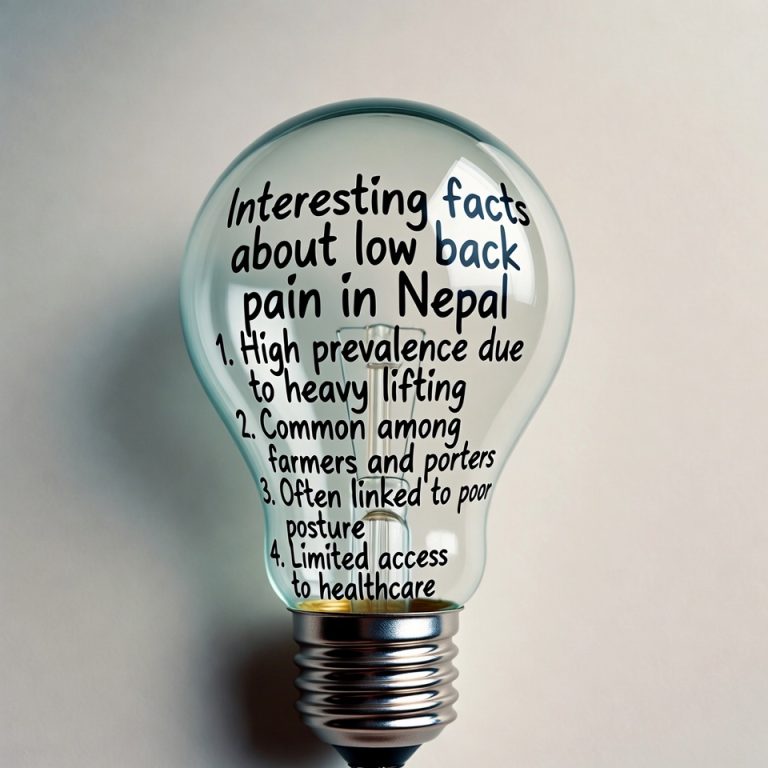
Low back pain is one of the most common health problems affecting people in Nepal today. Whether you’re a farmer working in the fields, an office worker sitting at a desk, or a shopkeeper standing for long hours, chances are you’ve experienced that nagging ache in your lower back at some point. Let’s explore some surprising facts about this widespread condition that affects millions of Nepalis.
Low Back Pain Is Extremely Common in Nepal
If you think you’re alone in experiencing back pain, think again. Studies show that low back pain affects a huge portion of Nepal’s population. The problem is so widespread that it has become a major public health concern across the country.
What makes this even more interesting is that low back pain doesn’t discriminate. It affects people from all walks of life, whether you live in Kathmandu or a remote mountain village, whether you’re young or old, rich or poor. The pain can strike anyone, though certain groups face higher risks than others.
Your Job Might Be Hurting Your Back
One of the most fascinating aspects of low back pain in Nepal is how closely it’s linked to people’s occupations. Different types of work create different risks for your spine.
Farmers, who make up a large portion of Nepal’s workforce, face particularly high risks. Bending over repeatedly to plant rice, carrying heavy loads of crops, and working in awkward positions for hours put enormous strain on the lower back. The traditional farming methods used in many parts of Nepal, while culturally important, can be tough on the spine.
Also Read: Back Pain Among Nepalese Construction Workers: Causes, Prevention, and Treatment Guide
Office workers aren’t off the hook either. Sitting for long periods at a desk, especially with poor posture or inadequate chairs, creates its own set of problems. Many offices in Nepal lack ergonomic furniture, which means workers are sitting in positions that stress their backs all day long.
Bus drivers and transport workers also experience high rates of back pain. The combination of sitting for extended periods, vibrations from the vehicle, and the physical demands of their work creates a perfect storm for back problems.
Also Read: Low Back Pain in Nepali Nurses: Causes, Prevention & Treatment Tips
Women May Experience More Back Pain
Research suggests that women in Nepal might experience low back pain more frequently than men. This could be due to several factors unique to women’s lives in Nepal.
Household work plays a significant role. Many Nepali women spend hours each day doing physically demanding tasks like carrying water, washing clothes by hand, cooking while sitting on the floor, and lifting children. During pregnancy, women face additional strain on their lower backs as their bodies change and they carry extra weight.
Cultural expectations also play a part. In many Nepali households, women are expected to manage all domestic duties while also potentially working outside the home, creating a double burden that can take a toll on their backs.
Also Read: Low Back Pain During Pregnancy: An Underreported Ailment Affecting Over 50% of Future Mothers
Age Matters, But Not How You Think
While many people assume back pain is just a problem for older adults, the reality in Nepal is more complex. Low back pain can affect people at any age, including younger adults in their twenties and thirties.
However, the causes of back pain do tend to change with age. Younger people often experience back pain due to injuries, poor posture, or heavy physical labor. As people get older, wear and tear on the spine, along with conditions like arthritis, become more common causes.
Most Back Pain Gets Better on Its Own
Here’s some good news: the majority of low back pain episodes are what doctors call “acute,” meaning they’re short-term and get better within a few weeks. Your body has remarkable healing abilities, and most simple back strains or sprains will improve with time and basic care.
However, when back pain becomes “chronic”, lasting for three months or longer, it becomes a more serious concern. Chronic back pain affects daily activities, work productivity, and overall quality of life. It can make simple tasks like tying your shoes or picking up a child difficult and painful.
Traditional Beliefs and Modern Medicine
In Nepal, many people turn to traditional healing methods when they experience back pain. These might include massage, herbal remedies, or visits to traditional healers known as dhami-jhankri. While some of these approaches can provide relief and comfort, it’s important to understand when modern medical care is necessary.
Further Reading: Can a Simple Back Belt Really Help Your Lower Back Pain? New Research Shows Promising Results
The challenge is that some people delay seeking medical attention because they rely solely on traditional methods or because they believe back pain is just a normal part of life that must be endured. This can lead to problems going undiagnosed and untreated.
Prevention Is Possible
One of the most important facts about low back pain is that many cases can be prevented. Simple changes in daily habits can make a big difference:
- Proper lifting technique is crucial. Instead of bending from your waist to pick up heavy objects, squat down and use your leg muscles to lift while keeping your back straight.
- Regular exercise strengthens the muscles that support your spine. Even simple activities like walking or basic stretching can help.
- Good posture matters whether you’re sitting, standing, or working. Being aware of how you position your body throughout the day can reduce strain on your back.
- Maintaining a healthy weight reduces the load on your spine and decreases your risk of back pain.
Also Read: This Is How Much You Should Walk Daily To Prevent Low Back Pain
When to Seek Medical Help
While most back pain improves on its own, certain warning signs mean you should see a doctor right away. These include:
- Pain that travels down your leg, especially below the knee
- Numbness or tingling in your legs or feet
- Weakness in your legs
- Loss of bladder or bowel control
- Pain that gets worse instead of better after a few weeks
- Back pain accompanied by fever or unexplained weight loss
These symptoms could indicate serious conditions that need medical attention.
The Economic Impact
Low back pain doesn’t just affect individual health, it has significant economic consequences for Nepal. When people can’t work due to back pain, they lose income. Families struggle financially, and the country loses productivity. Healthcare costs for treating back pain also add up, putting strain on Nepal’s healthcare system.
Understanding these facts about low back pain can help you protect your own back health and recognize when you or someone you love needs help. While back pain is common, it doesn’t have to control your life. With the right knowledge, habits, and care, most people can manage their back pain and continue living active, fulfilling lives.
The information presented is based on current scientific evidence and is intended for educational purposes. It should not replace professional medical advice, diagnosis, or treatment.